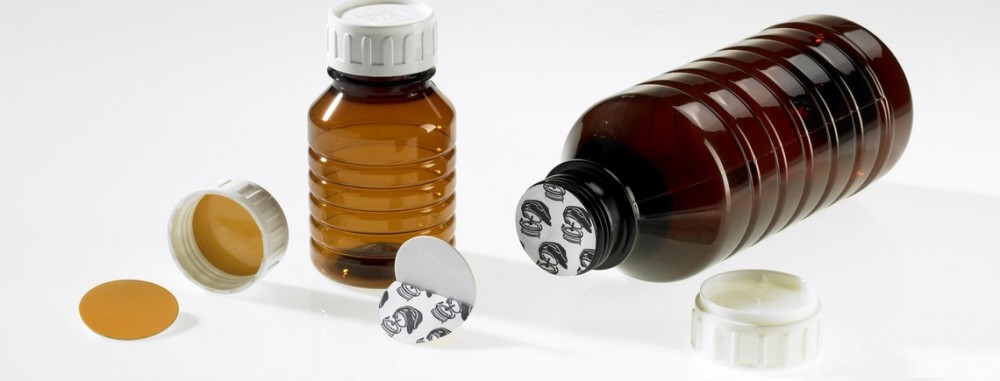
The Poor Man’s Tamper Evident Seal – Pressure Sensitive Cap Sealing

Tamper Evident Seal

When looking into whether to use a pressure sensitive tamper evident seal or an induction seal it is a good idea to understand the core reasons behind applying tamper evident seals and induction seals to bottles and jars. 

For induction sealing the key benefits from that type of seal include:  Tamper Evident Seal

  1. A visual tamper proof barrier showing the client the contents of this product have not been compromised.
  2. An oxygen and moisture barrier, preserving the integrity and shelf life of products.  For this reason alone induction seals are often referred to as freshness seals.
  3. Eliminate leaks through caps.  Often plastic caps are well tightened after their bottle has been filled, however temperature changes resulting in slight cap expansion and contraction and the vibration of transport result in caps loosening and product leaking, Eg. Often compromising significant portions of product shipment that become very difficult to retail if not impossible.
  4. To provide a professional finish to the product showing the manufacturer cares about the above three major benefits of good product sealing.

For pressure sensitive sealing – sometimes called PS22 Wadding the key benefits from that type of seal are reduced:

  1. A visual tamper evident barrier showing the client the contents of this product have probably not been compromised
  2. To provide a professional finish that resembles the level of care used by manufacturers using induction sealing.

Pressure sensitive wadding is susceptible to someone that can come along and carefully peel such a liner partially off the neck of a bottle and then simply tighten the cap again to apply pressure and re-seal the bottle; no equipment or tools is required. In this way bottle sealing with pressure sensitive cap sealing is more visual than practical. 

Pressure sensitive cap lining material usually has no foil barrier and therefore has little to no barrier properties to lengthen shelf life or preserve freshness.  Being glue based, many liquid contents are not suitable for pressure sensitive or PS22 cap sealing.

So why do companies choose pressure sensitive sealing materials over induction foil sealing?

In some cases it is ignorance of the induction sealing process and in other cases it is the “poor man’s” version of a tamper evident seal. 

Induction sealing tamper evidence requires induction sealing machinery.  Pressure sensitive sealing requires no machinery.

Safe bench top induction machinery can start at USD$3500.00.  Beware there are many hand held induction machines on offer for sub USD$1000 and manufacturers of that level of equipment refuse to provide safety certifications or advise that they do not “yet” have the certification.

An induction machine is not like a toaster or a kettle so beware of anyone offering toaster or kettle prices for induction sealing equipment.  An induction machine deals with high currents and produces high levels of magnetic and electrical fields. 

If you find a retail product on the shelf with a pressure sensitive seal be aware that while it looks like it is tamper proof it is at best only ‘tamper evident’.  The company producing that product is taking the cheapest path to providing you with a look that resembles but in no way performs like an induction seal or a tamper proof seal.

Induction Sealing Bottles with Specialty Caps

Induction Sealing

A Tunnel Induction Sealing Head lets you seal caps where the foil sits a distance greater than say 4 mm from the top surface of the cap; This is often the case with twist top spouts, flip top lids, sports drink caps, sipper caps or shaker caps.

Induction sealing is a process where a coil in the shape of an elongated loop is used to generate a fast oscillating high magnetic field. This magnetic field can change poles as many as 100,000 times every second.

The magnetic field can travel through air and plastic. When the magnetic field meets a metal surface, the magnetic field “induces” a high oscillating current in that metal surface in a plane that is parallel to the coils that generated the magnetic field.

A magnetic field generated from a “point” dissipates with the cube of its distance from that point.

In general, the magnetic field of an induction sealing machine needs to be within 5mm or ¼ inch from the sealing foil to obtain meaningful production speeds.

There are a large range of caps that do not fit the standard flat top profile and present a problem to bring the magnetic field of the heat sealing equipment to within 5mm or ¼ inch from the sealing foil.

These specialty caps need an adaption from a standard flat coil sealing head to a tunnel sealing head. The Coils are shaped to pass around the tunnel. The tunnel allows the protruding feature of the specialty caps to pass through the machine without lifting the plane of the magnetic field further away from the sealing foil within the bottle cap.

On the SealerOn website there is a youtube icon that will link you to videos showing SealerOn™ heat sealing or more accurately induction heat sealing using a tunnel sealing head.

Induction Sealing
Induction Sealing

The SealerOn™500 fitted with a sealing tunnel is capable of sealing at sealing speed up to 10 Meters per Minutes or 30 Feet per Minute depending on the cap and foil combination.

For faster induction sealing there is the MeRo adjustable tunnel sealing machines. These machines have the added and unique feature of having an adjustable width sealing head. Having an adjustable width enables higher concentrating and focussing of the induction field allowing for higher speed sealing. A MeRo 2Kw unit is capable of sealing at sealing speed up to 30 Meters per Minutes or 90 Feet per Minute depending on the cap and foil combination.

Efficient cap sealing means that less time is needed under the sealing head and hence higher production speed is possible.

A Flat profile sealing head will allow for a greater range of cap sizes and even allows for that Sealing head to be placed at an angle across the product’s path to achieve sealing of cap diameters that are even wider than the coil winding pattern within the sealing head. It is quite possible to have a Flat profile sealing head that can seal caps from 30mm to 110mm wide. The trade-off for the versatility of this profile sealing head on a heat sealing head is lower speed throughput and an inability to seal specialty caps.


Safe, Affordable, Handheld or Bench Top Induction Sealing Machine

Following frequent inquiries from smaller businesses, some start up companies, and testing labs looking for a reasonably priced induction machine, we have decided to make available a safe and affordable induction sealing unit.

Smaller businesses have low budgets in mind, but it doesn’t mean that they are ready to compromise machine safety and the integrity of their products.  Regrettably, there are not too many good options available in the market.  The majority of low cost induction sealing units do not present CE safety certification for LV and EMF.

Induction Machine CE Safety Certification for LV and EMF

The CE mark should be applied in order to legitimately market electrical and electronic products in the European Union (EU), but only after you have proven compliance with all applicable directives.  Compliance is established by testing the applicable harmonized standards for the safety of electrical and electronic products in relation to the effects of electromagnetic fields (EMF) and EMC on the functional safety of equipment. CE marking requirements now include compliance with electromagnetic field and electromagnetic compatibility standards. Manufacturers must ensure that products already on the market comply. This is precisely the reason why almost all other low cost induction sealing units do not have this CE safety certification.

Safe Induction Machine Option

The conception of SealerOn100™ was brought about by this need to supply the market with a machine that is certified safe and efficient. Induction machines generate high current and high electromagnetic field to accomplish their tasks. The birth of SealerOn™-100 has filled a gap in the SealerOn™ range that has provided a dependable solution to higher throughput equipment our clients are familiar with and put their trust in.

Immediately after its initial launch, we were flooded by a large number of inquiries. The unit is fully serviceable and it is fashioned to have its main electronics replaced in under 5 minutes!  Watch our video:


How Induction Sealing Takes Place

Induction sealing is a straightforward and simple process but an efficient way to seal bottles. The filling machines fill the bottles and are capped at some point.  The plastic cap has an aluminium foil liner inside.  Once the capped bottle passes under the induction sealing machine, which transmits electromagnetic energy to the foil liner, the liner becomes hot and welds itself to the neck of the container which remains in place even when the cap is removed.  The aluminium foil provides a tight seal that helps  prevent leakage, provides tamper evidence and can improve the shelf life of the product.

For small production run of sealing a few hundred units a day, SealerOn™-100 is a good solution.  Highly recommended for:

  • smaller or start-ups businesses looking to introduce a new product in the market
  • ideal for laboratory testing and applications
  • a low cost backup measure for higher end induction equipment

When you have time to properly align the sealing head visually, the SealerOn™-100 can be supplied with just a sealing head or wand. To insure a steady and even sealing, it is essential that the sealing head is level and well centered. The option of a stand to hold the sealing head and a locating bracket that aligns the product under the sealing head is made available to eliminate alignment errors.

We are proud of our SealerOn™ range of induction sealing equipment that performs reliably, safely and are easily serviced. We are delighted to be able to present a realistic and safe alternative for those in need of low budget, bench top or hand held induction sealing machine.

Filling Machine and Heat Sealing Machine Turnkey Packaging Line

Below is an example of a Turnkey solution for filling and packing creamed honey.

A three Lane Piston Filler and Heat Sealing machine was combined for packing creamed honey.

 Watch our Filler and Heat Sealer Machine in action:


Fully Automated Filling Machine Features

  1. The machine feeds empty tubs into three lanes of an indexing (Start-Stop) conveyor on the machine.
  2. PLCs of the Filler and Heat Sealer talk to each other to time when filling takes place.
  3. Sensors on the Machine check that tubs are loaded properly and that tubs are present when they are under the filling stations.
  4. An accurate three head piston filler fills the tubs.
Heat Sealing Machine Process
  1. The Filled Tubs are indexed to underneath a Heat Sealing Station.
  2. Heat Sealing Foil has been indexed into place above the tubs and infront of a cutting and sealing mould. The mould has heating elements carefully temperature controlled and the mould descends to press the film onto the tubs.
  3. The Sealed Tubs are then indexed underneath the Lid Denester.
  4. A rotating Cylinder and suction cups take 3 lids from the bottom of the lid stacks and rotate to gently place the lids on top of the sealed tubs. At this stage the lids are not firmly pressed into place.
  5. ‎The tubs with loosely fitted lids are indexed under a pressing station to firmly place the lids into place.
  6. A roller after this stage is the final assurance measure to make sure the lids are pressed firmly into place.
  7. ‎Finally, the filled tubs with lids are lifted from the conveyor where they are positively slid onto an awaiting finished product conveyor.
Filling and Sealing Machine Speed

The filling and sealing Speed of this three lane system is designed for up to 40 Tubs per minute. Less viscous product could be filled faster. Higher speeds are of course possible with wider equipment fitted with more lanes.

Our SealerOn fully automatic filler and heat sealer equipment calls for minimal operator intervention. Normally, operators only need re-supply packaging components simply by loading supply hoppers and also taking away completed cartons.

Be among our satisfied clients around the globe who are proud owners of SealerOn brand production machinery.  Contact us today for your production requirements.

MeRo 2KW Air Cooled Induction Sealer

Induction Sealer

The MeRo 2KW Air Cooled unit is a reliable workhorse with standard features that many quote as confusingly priced options. It is what we call the medium priced high end machine.

The machine has a Motorised Height Adjustment, Missing Foil Detection, and Bottle Accumulation Detection. It also has an energy trasnferred reading for process validation.  This  unit can be supplied with a flat sealing head or an ADJUSTABLE WIDTH tunnel sealing head.

Really built in Europe(Italy); not simply assembled with Chinese circuit boards and parts and then sold as a western made machine.

The MeRo equipment comes from the MeRo family of power electronics that includes Coronatreater that go well beyond  75KW !!; so you can trust that you are dealing with equipment manufactured by a company that knows how to build and handle power electronics.

MeRo 2KW Air CooledMeRo Induction Sealer
MeRo ADJUSTABLE WIDTH Sealing Tunnel

Electrical and Mechanical Specifications*

Supply voltage 3×380 V. 50 Hz three-phase

  • MAXIMUM DRAWN POWER: 2,2 KVA
  • MAXIMUM OUTPUT POWER: 2 KW
  • WORKING FREQUENCY:30 – 50kHz
  • AMBIENT TEMPERATURE : 0°C..+40°C (-25°..+70° transport) (-25°..+55° storage)
  • RELATIVE HUMIDITY : <85%
  • PROTECTION : IP20 STANDARD
  • CERTIFICATION : EC (LOW VOLTAGE)
  • DIMENSIONS GENERATOR : Dimensions height 600mm, length 365mm, depth 460mm. Weight 55 Kg

*Subject to Change

Typical Application Configuration:

   Plastic Cap

CONVEYOR SPEED: up to 30 m/min;
FOIL SIZE:   35 mm;
CAP SIZE:    55 mm ext. diameter;
CAP STYLE:    flip top screw cap (see drawing);
BOTTLE MATERIAL:   Plastic

Induction Sealing Bottles Using Specialty Caps

On cases where the foil sits further than 4mm from the cap’s top surface, tunnel induction sealing head will allow you to seal it. Usually, this is the scenario with twist top spouts, flip top lids, sports drink caps, sipper caps or shaker caps.

When a coil shaped elongated coil generates high, rotating magnetic field, induction sealing occurs. The coil that carries a magnetic field is generated as well as, shift course several thousand times a second.

This magnetic field can pass through plastic or air. If it comes across metal, then it will work on producing current in the metal parallel to the coils that made the magnetic field.

A magnetic field produced from a “point” dissipates with the cube of its distance from that point. Generally, the magnetic field of an induction sealing machine ought to be within 5mm or ¼ inch from the sealing foil to have significant production speeds.

A number of cap variety do not match the standard flat top profile which presents a challenge to bring the magnetic field of the heat sealing equipment to within 5mm or ¼ inch from the sealing foil.

These types of specialty caps require an adaption from your standard flat coil sealing head to a tunnel sealing head. The Coils are designed to pass within the tunnel. The tunnel permits the protruding feature of the specialty caps to pass through the machine without moving the plane of the magnetic field farther away from the sealing foil within the bottle cap.

On the SealerOn webpage there is a youtube icon that will link you to videos showing SealerOn™ heat sealing or more accurately induction heat sealing using a tunnel sealing head.

Relying on the combination of cap and foil, the SealerOn™500 with a sealing tunnel installation has a speed capable of up to 10 meters per minute or 30 feet per minute.

The MeRo adjustable tunnel sealing machines are designed for faster induction sealing. These machines have the added and unique feature of having an adjustable width sealing head. This feature allows for higher concentrating and focussing of the induction field for increased sealing speed. A MeRo 2Kw unit is capable of sealing at sealing speed up to 30 Meters per Minute or 90 feet per minute depending on the cap and foil combination.

Less time required beneath the sealing head defines efficient cap sealing, which lead to higher production speed.

Flat profile sealing head allow an increased variety of cap sizes and permits the sealing head to be positioned at an angle over the product’s route to receive a sealing of cap diameters which are even wider than the coil winding pattern within the sealing head. Potentially a flat profile sealing head can seal caps from 30mm to 110mm wide. Not being able to seal specialty caps and lower speed throughput are the trade-offs for the flexibility of this profile.

What Will Your Self-Adhesive Labelling Machine Distributor Need to Know Before Quoting You a Price

When there are unknowns for a supplier or tradesperson that needs to quote you for a job, their only responsible way to quote you is to find out all they can about your job and then quote you a price that will allow for what is known and add a “contingent factor” into the price. If all goes to plan in providing the service and very little unknowns affected the Job, the supplier ends up making more money from the Job. If there are too many unknowns that have affected the job, the supplier could lose money should they have not allowed enough of a contingent factor into the price. Undeniably true, there are suppliers that cut corners when they find out they stand to lose money on the job. Some only do the very least to meet their commitments or worse, abandon the job which cause losses to everyone.

The more experienced supplier or tradesman, with excellent reputation will approach a Job by taking the time to thoroughly understand the job and insure their client also thoroughly understands the job. Due to their expertise, such suppliers could identify some of the unknowns in the job and will be able to provide an accurate quote thereby lowering down the contingent factor built into the price. These suppliers know a problem properly identified is more than half solved.

The supply of self-adhesive labelling equipment is very much a problem that needs to be “half solved” through a process of identifying what is involved thoroughly before moving on to the quotation and eventual supply phase. Be wary of future suppliers that require very little information before quoting you on a job. It is possible that there is either a higher “contingent factor” built into the price or there will be parts that will be neglected on purpose.

An experienced machine supplier like LabelOn™ will take you through a thorough process of identifying what needs to be known before giving you a price for the machine they will supply.

Fast price range can be acquired from LabelOn™ which will be reduced down during formal quotation process.

Knowing the above mentioned facts, what will your self-adhesive labelling machine supplier need to know?

For self-adhesive labelling bottle, shapes are classified into Flat-Sided, Oval and Round. Within the Round classification there are sub classifications of cylindrical, tapered and those with an orientation feature. The most likely orientation features on a round product include handles or flat panels, markings or the need to orientate the body label with another label or marking already on the round bottle.

Height, length and thickness help identify the bottle sizes. In the case of a round bottle it is the height and diameter that will usually best describe their dimensions. The bottle labels will be supplied in rolls. The range of label roll diameters and heights are important information to include in any machine proposal.

The label panel on a product is the area on that bottle where the labels are expected to be placed. It is important to identify if the product labels need to be placed on a recessed surface on the bottle – especially for round bottles. Equally important is to know if the product label area has sufficient room for the common variations in bottle dimensions added to the common variations of label placement. For round bottle labels, there is a need to identify if the application calls for a single or more than one label. For single product label, there is a need to identify the percentage wrap of the bottle label. Soon after collecting all this information in writing, pictures showing the obtained data should be put together for machine proposal records to make sure that no pertinent considerations are missed.

It is a good practice to acquire a quick budget range for your labelling equipment prior to contacting a supplier. If your budget meets their price range, make sure that most, if not all, of the above mentioned considerations are extensively covered in any future formal quotation presented to you

Exactly What Shape Sealing Head is Ideal on an Induction Sealing Machine?

To be able to understand what shape sealing head is the most suitable on an induction machine, we should learn first, precisely how induction sealing occurs.

The sealing head is the portion of the machine that is put over the path of the product cap or lid. Inside the sealing head is typically long oval shaped coils of thick wire that deliver high current that alters direction many thousands of times a second. The coil that contains a magnetic field is generated and in addition, adjust course several thousand times a second. The magnetic field will get weaker as it progresses away from the coil that made it to begin with nonetheless it is able to travel through air and plastic. Coming across metal, it will act to produce current.

Heat sealing machines function a little different. It is waiting for a product with metal laminated foil in its cap. The magnetic field from the sealing head acts to generate current in the laminated foil and the laminated foil gets hot. There is a layer that is laminated to the foil that turns wet with the heat or melts. When the product has completely passed from under the sealing machine, the foil will begin to cool and the layer that became “wet” will set to bond the laminated foil across the opening of the product.

It can be understood from the above principle that bottle or product sealing with the utilization of induction machines will rely on the time the product is under the magnetic field and how close it becomes to the origins of the magnetic field.

There are two distinct shapes of sealing heads for cap sealers being Flat profile and Tunnel profile sealing heads.

The Flat profile sealing head is suitable for “Standard Flat Caps”. A “Flat Cap”, typically speaking, means a cap where the plane of the induction liner is at 4.0 mm of the plane of the Cap’s top surface.

Tunnel Profile sealing head is best for “Specialty Caps“. Typically, the Tunnel Induction Sealing Head permits cap sealing in which the foil is located far than 4mm from the top surface of the cap; this is regular with twist top spouts, flip top lids, sports drink caps, sipper caps or shaker caps.

The magnetic field concentrates to a place inside the tunnel profile because of the tunnel sealing head thus delivers stronger magnetic fields over a generally smaller width route for the products moving below. A Tunnel sealing head also makes it possible for the coils inside the sealing head to have a route lower than the top of the product caps. This end in delivering the foil inside specialty caps closer to the magnetic field. The disadvantages of employing tunnel profile sealing head is the constrained array of cap dimensions it can efficiently seal and that it is not effective with big caps. MeRo™ brand induction sealer, nonetheless, is the exclusion to this concept. MeRo™ can, typically, cater for a range of specialty caps with an adjustment of 30mm and can seal cap diameter between 30mm to 60mm.

Better production speed is achievable where there is efficient cap sealing – less time beneath the sealing head.

Flat profile sealing head permit a larger selection of cap sizes and permits the sealing head to be positioned at an angle over the product’s route to obtain a sealing of cap diameters which are even greater than the coil winding pattern within the sealing head. Possibly a flat profile sealing head can seal caps from 30mm to 110mm wide. Decreased speed throughput along with the inabiility to seal specialty caps are the cons of this profile sealing head on a heat sealing head.

The Poor Man’s Tamper Proof Seal – Pressure Sensitive Cap Sealing

It is an excellent approach to first understand the main purposes of applying tamper evident seals and induction seals to bottles and jars prior to choosing which one to utilize in your application.

For induction sealing the key benefits from that type of seal include:

a)    An evident proof to show the end user that the contents of the merchandise were not opened.

b)    It work as oxygen and moisture shield to preserve the reliability and shelf-life of the goods. For this reason alone, inductions seals are known to be freshness seals.

c)    Removes leakage out of caps. Plastic caps are often closed pretty tightly right after their bottles are filled. Caps loosening and leaking goods are direct results of temperature modifications and vibration while in transport,  frequently compromising considerable parts of product shipment that become hard to retail if not impossible.

d)    To present the product in a professional manner that show the manufacturers’ concern on the best practices of good product selling.

For pressure sensitive sealing – sometimes called PS22 Wadding the primary advantages of that form of seal are diminished:

a)    A visible tamper evident barrier indicating to the buyer the contents of this product have not been compromised.

d)    To provide a professional finish that appears similar to the amount of care used by manufacturers using induction sealing.

You’ll be able to carefully peel the liner off the neck of the bottle containing pressure sensitive wadding and merely tighten up the cap by making use of pressure to be able to reseal the bottle with virtually no equipment or tools needed. By doing this bottle sealing with pressure sensitive cap sealing is a bit more visual than practical.

Pressure sensitive cap lining material normally has no foil barrier and thus has little to no barrier qualities to prolong shelf life or keep freshness. Several liquid products are not fitted to PS22 cap sealing because it is glue based.

Why is it that businesses choose pressure sensitive sealing materials over induction foil sealing? In some cases it is lack of knowledge of the induction sealing process and in other cases it is the “poor man’s” form of a tamper evident seal.

Another reason is the fact that Induction sealing tamper proof evidence requires induction sealing machine while pressure sensitive sealing requires no machinery whatsoever.

From USD$3500.00, you will find “safe” bench top induction machinery. Many hand-held induction machines, offer for sub, starts at USD$1000 and manufacturers of that level of equipment refuse to offer safety certifications or advise that they do not “yet” have the certification.

An induction machine is not like a toaster or a kettle so watch out for anybody offering toaster or kettle price tags for induction sealing equipment. An induction machine works with high currents and produces high degrees of magnetic and electrical fields.

Bear in mind on some retail products within your shelf with pressure sensitive seal – that although it looks tamper resistant, it is merely ‘tamper evident’ at best. The company making that product is getting the lowest cost path to providing you with an appearance which resembles but in no way works like an induction seal or a tamper proof seal.

How a Bottle Labeler makes all the difference

You are Reading How a Bottle Labeler makes all the difference which is a post from: LabelOn™ Labeling Machines If you have enjoyed this post, be sure to follow us on Twitter, Facebook, Google Plus

Bottle Labeler

Critical to a bottled product’s success is its appeal to the eye and its ability to convey a recognizable product or brand name. Where first impressions count so much for new product uptake your product, no matter how good it is, may be judged and discarded – in the blink of an eye – by itd cover; its label.
Unspoken thoughts by most consumers are if the label is not put on properly there’s something wrong with that product. At the very least if the manufacturer cannot properly monitor its product’s look or label what hope has that manufacturer got in properly monitoring its products contents.

When starting to ramp up production the question will always come up ; when is it the right time to buy a Bottle Labeler? Usually this question comes up when it can be seen that it is a painstaking slow process to apply self-adhesive labels on by hand and when the hand labeling process simply cannot produce the consistency of placement.
A bottle labeler takes over the job of moving the label and the product’s surface at a synchronized speed while the pressure sensitive label is being pressed down. This is in essence what a person tries to do as they work to apply a label manually onto a bottle. The problem is, when a person is doing this tricky task of bottle labeling, they usually have to do it very slowly to get it right and to get it consistent.

Bottle Labeling Equipment

The label applicator can form the most tricky and critical operation of a production line. The LabelOn™ Modular range is an excellent choice of Bottle labeler as it is so intuitive to use and so responsive to adjustments. This responsiveness makes it straight forward for the operator to quickly realize the impact of any single adjustment in isolation from other adjustments on the machine.

The LabelOn™ Modular machine can be configured to label bottles that are flat sided, oval cross-section (that is curved sides) and round bottles. In the round bottles category this labeling is further divided into labeling that is not dependent on a feature of the bottle – one or two labels and labeling that is dependent on a feature of the bottle – one or two labels (otherwise known as Orientation Labelling).

Bottle Labeler

An in line bottle labeling equipment can form part of a complete production line that can include a bottle unscrambler, bottle filler, bottle capper, induction sealing machine, and a case packer. Of all these machines the machine that will need the finest control and the most sophisticated electronics and motor control is likely to be the label applicator. For those looking into a new production line it can be the labeling machine that needs the most consideration as it is this machine that will require the most settings and adjustments it is also likely the machine with the most sophisticated electronics.

The LabelOn™ bottle labeler represents a best value label applicator that has self-evident machine adjustments and is built for fast swap in swap out electronics service.